Showing posts with label Unit 1. Show all posts

Monday, 9 March 2015

Specialised Field

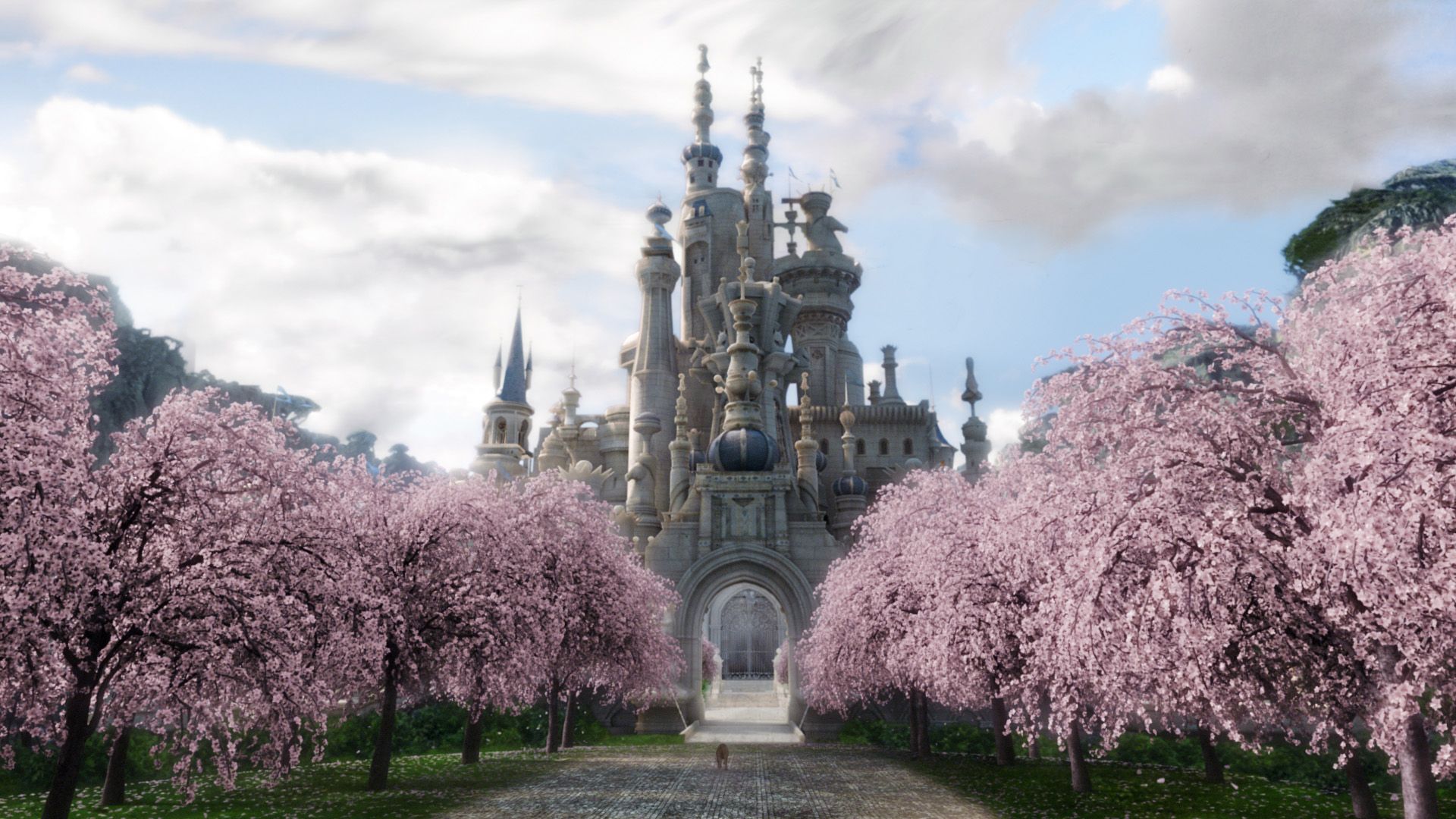
Alice in Wonderland: Salazem Grum and Marmoreal

Assessment brief

06/01/15

Section 1:
I am aiming to successfully show the juxtaposition between the two castles featured within Tim Burton's Alice in Wonderland: The castle of Iracebeth within Salazem Grum and Marmoreal. In extension, the sets related to both of these locations, such as the chess board.
I will include sketches and drawings of designs I have produced by looking at the buildings shows within the films, as well as architecture and designs that I myself will look at, photograph and incorporate. My overall aim is to produce something that will inevitably show the juxtaposition of Dark and Light.
To start with, I will carefully analyse different aspects of the two main locations and pick out anything about them that I feel show the juxtaposition I want to show by the end of this project, as well as any other aspects within the film that I feel will help project the dark and the light within it.
By the end of this project I will have created numerous sketches and designs as well as my own reconstructed models of both The Castle of Iracebeth and Marmoreal that successfully show the juxtaposition of Light and Dark.


Marmoreal


Salazem Grum
Castle of Iracebeth

The Chessboard

Section 2:

To help me complete this project I will be looking at various different buildings and the aspects of buildings that I will be able to tie into the designs I will compile and create. This will then help me progress in my reconstruction of  The Castle of Iracebeth, Marmoreal and The Chessboard. I will also research into blue printing, Architectual drawings  and Designers to extend my project further. As well as looking at actual buildings, I will also look at buildings, particularly castles, within films to get a broad range of styling that I can then experiment with and incorporate. Looking at different architecture throughout different countries will also be vital.

Neuschwanstein Castle
Germany

Mont Saint Michel
France

Prague Castle
Prague
Czech Republic

Windsor Castle
England
Castle Howard
England
Corfe Castle
England
Chateau De Chambord
France
Castillo de Coca
Spain
Kronborg Castle
Denmark
Catherine Palace
Russia


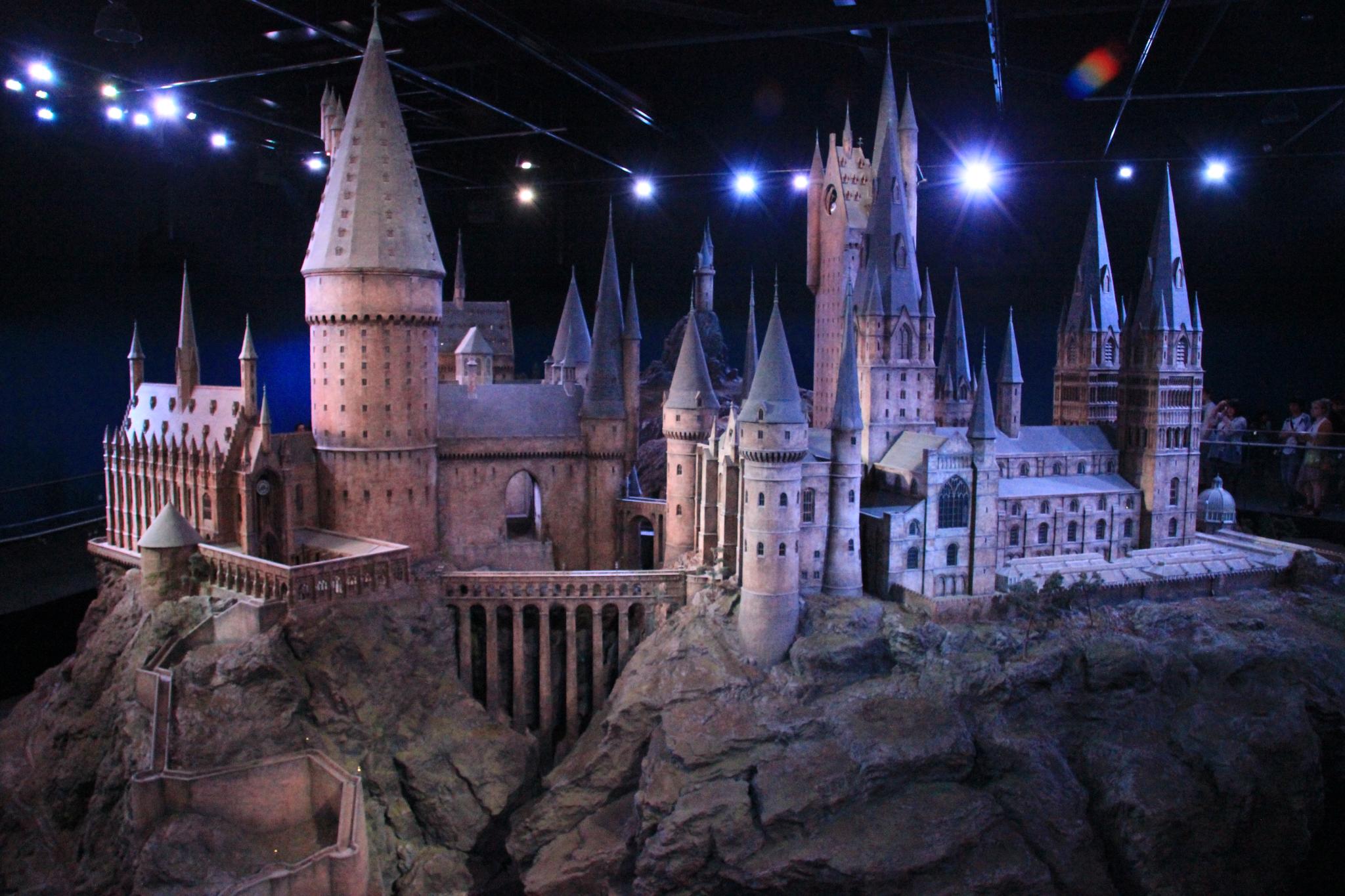
Hogwarts Castle
Harry Potter

Sleeping Beauty's Castle
America
Minas Tirith
Lord of the Rings

The imaginaruium of doctor parnassus

The Big Atures in Lord of the Rings

Harry potter world


Source 3:

Throughout this project I will have multiple sketches and idea's that will show the development of my work as well as small models of aspects of the design using multiple media such as wire, clay and cardboard. I will also create some graphical sketches on Photoshop using a drawing tablet. This will also allow me to test the materials for suitability and will then help me come to a conclusion upon which media I shall use. The sketches and the small models will then be put together to create an overall piece.

Section 4:

Notes:

As part of experimenting, I intend to use polystyrene and mod rock to create small models of buildings, as a way to experiment with media that will eventually link towards my final idea.

I will be using the polystyrene to make a 3D model by slotting pieces together that will then be covered in mod rock so as to strengthen it, and will be including detail when putting together the polystyrene.

I will be looking at the covering of cake dummies, as it is similar to my idea

Covering polystyrene cake dummies


Sunday, 22 February 2015

Alice in Wonderland: Salazem Grum and Marmoreal

Alice in wonderland


What I hope to achieve 


10/02/15


Upon beginning this project, I hope to create numerous sketches using a Graphics Tablet that will help to show what I wish to achieve when I make my final piece. This will also mark the beginning of any development processes and testing that i will do throughout the project, as well as any designing that can then be made into 3D sculptures. 

As well as creating the digital sketches, I will also be testing and experimenting with 2D materials, such as Cardboard and Polystyrene, to create a 3D structure which I will then build on using Mod rock and paint.


Plan for 24/2/15:

today I will be creating numerous automatic sketches that show how my thought process develops as I draw, the small thumbnail images will also have a small amount of analysis if necessary. 


Done

Reflection:

I created about 16 automatic drawings that were based on Salazem Grum, the Red Queens castle. as I went on with the automatic drawings, I feel that the level of thought was running low, and that the detail was slowly coming to an end. At first my ideas were coming quickly. however to the end, my ideas slowly started to slow down and revolve around one thing, and were not as good as they were to begin with, as my thought process had stopped. 

Next time I do the automatic drawings, i will focus on something else, so that I have fresh ideas and I can develop my ideas throughout. 


Plan for 03/03/15

I will be taking some of my automatic drawings and developing them using the graphics tablet again, this will then allow me to start developing idea's, which I will then be able to start making 3D models of in future sessions.


Alice In Wonderland: Salazem Grum and Marmoreal

Research and Inspirational Artists


Drew Leshko


22/12/15


Drew Leshko is a Philadelphia based artist who works by carving and building up layers of paper and wood. His work is usually based on buildings in his neighbourhood that he wishes to create a 3D archive of that are in transitional periods. He works from both Observation and Photographs. The buildings he re-creates are at a 1:12 scale


I think this piece is interesting because, due to the scale in which he works, the amount of detail taken from either a photo or from observation is astonishing, including all of the posters and graffiti.


This artist uses a technique in which I wish to experiment, and although I will not be using wood, I will be experimenting with paper and Plasticard, which is used to create small models.


Much like Drew Leshko, I will be using photographs of buildings to construct, which will act as an experimentation and will also help me with the development of my final piece.


These models, while simple looking, are painstakingly created due to one man's hope to preserve his neighbourhood in his own way.


What else will I do:


As well as creating models in a similar way to Drew Leshko, I will also be creating small paper models of castles that I have already researched into, or chosen for inspiration, this will be done before I can start on the models, as it will allow me to practice making small scale models, and making 2D objects into a 3D model.

Wednesday, 11 February 2015

Life Drawing

Life Drawing


Using Wet Media (Paint)


26/01/15


While we were using paint, we weren't using paint brushes, and were to use our hands like we had previously done. We were only allowed to use the primary colours, white and Burnt Umber, for definition. We were to focus on the highlights and low lights, and pay particular attention to any other colours reflected on the skin.


I focused mainly on the shoulders and shoulder blades for this particular piece, and found that I enjoyed a method of pointilism. I was constantly dabbing my fingers on the paper, using a different finger for each colour so as to avoid mixing the colours up. This resulted in a bright and bold block coloured piece that wasn't neat or too messy. 


For this piece I tried using all of my hand, rather than just my fingers as I had previously. instead of dabbing the paint on, I wiped it onto the page using the side of my hand, making sure that, this time, the colours blended on the page. The over all effect was striking, however a little unintelligible.

Next time I do life drawing, I will be sure to step back from the easel once in a while so that I can see what my work looks like in comparison to the model. This will help me build on getting the correct proportion and will also help widen my perspective.


Tuesday, 20 January 2015

life drawing

Life drawing

Evaluations


20\01\15


I feel the it is very easy to use the chalk to create highlights, however at the same time it is rather difficult due to the fact that I need to look carefully where to put the highlights so that it is not out of proportion.


With this drawing, it came to my attention that, instead of doing rather harsh and sketchy lines, I had begun to soften the lines by blending, this affect wasn't as strong as in previous drawings. Upon realising this I tried to make the lines a little harsher, which worked to a certain extent, however was the wrong time to change what I was doing.


Sunday, 18 January 2015

Life Drawing

Research


Aspects of the body I wish to improve on


18/10/15


After the life drawing session, it came to my attention that I needed to look into how to draw hands and feet, as perhaps the head, in proportion to the body: Hands and feet in general.


The Head:


The Hands:


The Feet:


How I will put this research into context


This research will become very helpful when it comes to drawing full body sketches, or even focusing on these specific areas when life drawing. I will print out these images and use them as reference.

Additional research


Collar bones:

As I am interested in Collar Bones and the structure of them, I shall be focusing on them within my Vorticism and Futurism work.
I find them interesting because, depending on a persons structure, the collar bones can be visible or not, and have a different structure between men and women.


Thursday, 15 January 2015

Life Drawing

Using a model


Charcoal sketches


13/1/15


As this was the second session using the model and we had recapped the basics, we could then chose between using a graphics tablet, pencil or charcoal. As I used pencil in the session before, and using a graphics tablet wasn't something I preferred, I chose to use charcoal.

Charcoal was very easy to use and also allowed me to create rather messy drawings that still had an element of tidiness to them.


The first sketch was more of a practice, and I was also getting used to the media. I found it very easy, however, to sketch out the shape and as tone. The drawing has a very scratchy nature, and was once again focused on only the neck down.


This second pose I found a little more difficult to do, and I also found adding tone to it more difficult than I did with the first pose. It is also a little disproportioned.


This pose I found the hardest to do, as it meant looking closely at the shoulder blades and the small amount of shadowing. it also meant drawing a hand, which was quite difficult to do using charcoal, considering that I already struggle when it comes to drawing hands in the first place. I need to improve on trying not to make elements of the sketch too dark, such as the shoulder blades, and I also need to focus on drawing hands


With this sketch, I felt that I needed to include the head, however, I felt that it could ruin the piece, so I instead only included the hair and the bottom of the chin. I found this pose a little harder to draw, as the shadowing varied throughout from very little to a lot, which I struggled to do. This was one of the longer sketches, and I feel that having more time on it meant I had to do more when I finished relatively quickly, and so I kept adding more shadowing, which I eventually went a little over board with.


The final sketch was the most complex, as I needed to draw with perspective as well as include hands and feet, as I couldn't just avoid the,. The hands began as they did in the previous sketch, however, after looking more closely and going carefully around, I finally managed to draw hands that actually resembled hands, rather than sausages. The feet weren't as good, as I didn't have a lot of time to focus on them, and the legs also needed a little more time spent on them. I do feel, however, that this is the strongest session of the drawing due to things, such as the hands, that I had to focus on more to make them look realistic, even though they aren't wuite realistic yet. 

Life Drawing

Looking at a model


Back to basics


6/1/15


This was the first session in which we were using an actual model as a point of observation. I found this a little awkward, due to the fact that it was a little out of my comfort zone, however, I quickly adjusted. The model we are observing and will be for the sessions to come is female.
Because we were recapping the basics, we were using pencil and were using such techniques as measuring for proportion.

These are only two of the sketches I did.


Using pencil was a hard to use when it came to adding tone. I also pressed on a little too hard, resulting in a thick lines. The top sketch proved that, while I was mainly focusing on the neck down, I needed to look at the proportion of the head more, as it was too disproportionate to the rest of the drawing, this may also be because I drew the head last.

In the second sketch I didn't draw the head, but instead focused more on the neck down.


Life Drawing

Last session with Skeletons


Media Experimentation


16/12/14


Because this was the last session observing the skeletons, we were free to experiment with different media, My drawings were a mixture of media, such as pen, coloured pencil, chalk and One sketch on a graphics tablet. 


For the first sketch done on paper, I used white chalk for highlights and green chalk for shadowing.


For the second sketch, I focused mainly on the pelvis, using a felt tip pen and contour lines. As the pen was running out, I used this to my advantage, easily creating different tones within the sketch.


The final sketch I am most pleased with, I focused on the skull and started out using a plain orange colouring pencil to get the shape and tone within the drawing. I then started adding a small amount of green within and around to add an outline that wasn't too strong. After this, I used a ball point pen to go over the green lines and also did a little bit of hatching behind the skeleton. Over all I feel that this was my strongest drawing from this session.


Monday, 12 January 2015

Vorticism and Futurism

Vorticism and Futurism


Research


12/01/15


This assessment uses the life drawings I have previously done and will continue to make to create something that will eventually be a 3D structure in the style of Vorticism, Futurism or both.

What is Vorticism?


Vorticism was a short lived art movement, formed in London, that was first announced during 1914, however was quickly dismissed with the first world war. The founder of this movement, Whyndam Lewis, tried to but failed in reviving the movement in the 1920's. It was an avant- garde group that aimed to create art that expressed dynamism in the modern world and the relationship between machine and the urban environment. Vorticism was partly inspired by Cubism and cubist fragmentation.

What is Futurism?


Futurism was a rather aggressive and liberating movement that started in 1909 in Italy. It was a movement that rebelled against the norm, rejected anything old and looked towards the future, as the past culture was seen as oppressive. The aim of this movement was to free Italy of it's museums containing old art, referring to them as 'countless cemeteries'. This movement celebrated the modern world of industry and technology. Umberto Boccioni helped to shape the aesthetic of this movement.


The Vortecists


Whyndam Lewis was deeply hostile towards the Futurists, and believed art before Vorticism was exhausted. He was an artist, writer and polemicist, and published a Vortecist manifesto in a magezine called 'BLAST'. Lewis was a very opinionated man, and so was pushing the Vortecist movement forwards. However, with the arrival of WW1, the Vortecist movement ended, as it was seen as too much of a grim reminder to the use of mechanised weapons used within the war, and how such weapons had killed many people the Vortecists knew or were related to.

'Red Duet'
1914
'Workshop'
1914-1915

Sir Jacob Epstein, was a sculpture and while not actually associated with the Vortecist movement, was tied into it due to his work with the relationship between man and machine. His most notable piece of work, 'The rock drill' was dismantled after WW1, However was replicated and was displayed in a Vortecist exhibition within the Tate in 2011.

'The Rock Drill'
1913-1915

Edward Wadsworth was directly associated with the Vortecist movement who was, as well as being a painter, was also an engraver of wood and copper. His work did not finish after WW1, however, as he continued to paint with a nautical theme afterwards. He was a signatory of the manifesto published in 'BLAST

'The Port'
1915
'Rotterdam'
Woodcut
1914
'BLAST magazine'
1914

The Futurists


Umberto Boccioni was a principle figure within the Futurist movement and was an influential Italian sculptor and painter. He drafted 2 Futurist manifestos in 1910 and 1912 that elevated the force and energy in contemporary life. This particular art movement amplified the speed, violence and machine age.

'We declare a new beauty... A beauty of speed... A racing motor car is more beautiful that the Victory of Samothrace'

'Dynanism of the human body'
1913

'Elasticity'
1912
'Unique forms of continuity in space'
1913


Filippo Tommaso was the founder of the Futurist movement and posted his manifestation on the cover of the Paris newspaper 'Le Figaro' within which he declared that art was 'Art, in fact, can be nothing but violence, cruelty and injustice'