Showing posts with label Art History. Show all posts

Friday, 11 March 2016

Art History

Art History


1950's Design


11/02/16


The 1950's was the age of consumerism and massive change within the home. Houses were smaller after the war compared to before, and so ways to make more space were a welcome invite. Throughout this decade, open plan living was introduced, as well as fitted kitchens and stackable furniture, which was easier to move and was light. 

There were a few new designs invented during this time that today, we take for granted, such as trollies, ironing boards, and sofa beds. 

Brighter colours were also introduced; bubblegum, neon, and primary colours were huge in the home. So were geometric patterns and animal print. 

New materials were also found or invented to be utilized, such as PVC, Formica, rubber, met amine, aluminium, vinyl, and other plastics.

Some influences were the 1930's, modernism, and surrealism.

This was the decade where the structure of DNA was also discovered.

Americana in Britain:

After the end of the Degenerates, there was an outburst of expression and freedom. Jazz music boomed and Abstract Expressionism in America had become the art of the decade. Anything seen as primitive and imperfect that had been banned during Hitlers reign was celebrated in full force.
During the passing of American soldiers through Britain at the beginning of the war, the bright and optimistic style took influence in a place that had been starved of anything remotely luxurious.

Britain, being an island, had been put on rationing, both in industry and food, because of the lack of imports actually making it into the county, and because of the exports that were mostly unable to make it to their destination. Britain was being starved out and isolated.
Homes were plain and only held plain furnishings, white pottery, or 'blanks', because the only decorated pottery was traditionally British, and was being sold to America for money to continue with the war. Clothes at the time were also plain and were very expensive because of the rationing on industry. Any usable metal had been taken and melted down to be used in the war.

Rationing on industry was lifted first in 1952, and in 1954 for food, which was 8 years after the war had ended.

After the war, there was an influx of new materials when rationing had been lifted. Since there had been a massive decrease in population, there was more money to buy things, and there were more jobs. Women continued to work after the war in place of the mens jobs they had been required to fill during the war.

Festival of Britain:

In the summer of 1951, a national exhibition was held in the UK. It had been organized by the government to give the British a feeling of recovery in the aftermaths of war and to promote the British contributions to science, technology, industrial design, architecture and the arts.
The main feature of the festival was the Skylon Tower, which had been designed by Hidalgo Moya, Phillip Powell, and Felix Samuely.
The tower itself seemed to be floating above the ground, which fueled a popuar joke that it was much like the British economy, which 'had no visible means of support'


Charles and Ray Eames:
Charles Eames: 1907 - 1978
Bernice Alexandra "Ray" Eames: 1912 - 1988

Charles and Ray Eames were husband and wife, and we're both American designers who made significant historical contributions to the development of modern Architecture and furniture. One of their most famous designs was the "Eames lounge chair". Both also worked in industrial and graphic design, fine arts and film.


Charles Eames:

Charles was born in Missouri, USA. When he was older, he briefly studied Architecture at Washington University on an Architecture Scholarship. After two years he left.
Some say that he was dismissed for his advocacy of Frank Lloyd Wright and his interest in modern architecture, while others say he was dismissed for his 'too modern ways'.

Advocacy: Public support for or a recommendation of a particular cause or policy.

Charles Eames met his first wife, Catherine Woermann, while at University, who he married in 1929, and had a daughter, Lucia Jenkins, a year later.
He began his own architecture practice in 1930 with partner, Charles Grey, who were later joined by Walter Pauley. Eames was greatly influenced by Finnish Architect, Eliel Saarinen. Later he became the head of industrial design at the Cranberry Academy of Art after moving to Michigan with his wife and daughter to study Architecture.

In 1941, Eames and his wife divorced, and he married his friend from Crankbrook, Bernice Alexandra Kaiser. Together they moved to California, where they both lived and worked until they died. In the 1940's, they built the "Eames House", which was a ground breaking build, since i had been hand constructed over a number of days using pre-fabricated steel parts.


Bernice Alexandra "Ray" Eames:

Ray Eames was born in Sacramento. She was an American artist, designer, and film maker. Along with her husband, she is known for her groundbreaking contributions in the field of architecture, furniture, industrial design, manufacturing, and the photographic arts.

She graduated from Bennett women's college in Milbrook, New York, and then went on to studying Abstract expressionist painting with Hans Hoffman.

In 1936, she was the founder of the American Abstract Artists group.

In 1940, she received a recommendation from a friend, Ben Baldwin, to go to the Cranbrook Academy of art in Michigan, where she worked with people such as Charles Eames, Harry Bertoia, and Eero Saarinen. A year after, she married Charles Eames. 



Robin Day: 1915 - 2010


Day was an accomplished industrial and interior designer, and was also active in the fields of graphics and exhibitions.
Day was born in and grew up in High Wycombe, Buckinghamshire, which was a furniture making town in England.
He started his studies in High Wycombe Technical Institute, where he was a Junior day student, and progressed to High Wycombe school of art in 1931, then studied at the Royal college of actin 1934 on a scholarship, where he developed a ground breaking course in 3D design.

After the war, Day taught interior design at the Regent Street Polytechnic (Now the University of Westminster) where he met the architect Peter Moro, who he formed a partnership with in 1946 designing public information exhibitions.

He went on to create an ingenious concept for a range of multi-purpose storage unit fabricated from a tube of pre-formed moulded Plywood, which received international acclaimed.

He is best known for his Polypropylene armchair.


Lucienne Day: 1917 - 2010

Was a British textiles designer, who was inspired by abstract art.
She used bright, optimistic, abstract patterns in post war England, and was eventually celebrated worldwide.
She was born in Coulson, England. At the age of 17, she enrolled into the Croydon school of art, where she discovered her love for printed textiles. Later, she attended the Royal College of art, where she was a top student.
During her time at the college, she was sent on a two month placement to the firm, Sanderson, where she worked in a wallpaper studio, however she found it hard to adapt to the conservative style of the company.

She was inspired by Wassily Kandinsky and Joan Miro


Arne Jacobsen: 1902 - 1971

Jacobsen was a Danish architect and designer born in Copenhagen, and is well known for his contributions to Architectural Functionalism.

At first, he had hoped to become a painter, but was dissuaded by his father and instead encouraged to take a path in Architecture, which was a more stable career.

After a short apprenticeship in masonry, he was admitted into the Architecture school at the Royal Danish school of Fine Arts. Here he studied from 1924 to 1927 under well known Architects and designers, Kaj Gottlob and Kay Fisker.
Before leaving the school, he traveled to Germany and became acquainted with Walter Gropius and Miles Van Der Rohe.

After completing Architecture school, he began to work in a city firm called Poul Hosloes Architecture Practice.

In 1929, he collaborated with Flemmings Lassen to create the winning design of the "House of the Future" competition, and a year later, went on to designing the Functionalist Rothenberg House.

During WW2, Jacobsen had to leave the office and go into exile because of his Jewish background. Using a rowboat, he left by crossing the Oresund, all the way to neighbouring Sweden, where he spent two years living with 2 doctors, which limied his Architecture work. Instead he began to design fabrics and wallpapers.
After the war ended, he moved back to Denmark to resume his career in Architecture. The country was in urgent need of housing and new public buildings, but primarily spartan buildings, which could be made without delay.

Jacobsen is primarily remembered for his furnithure designs, including the Drop, Egg, and Swan chairs.








Saturday, 30 January 2016

Art History

Art History


Abstract Expressionism


16/12/15


Abstract Expressionism: A development of abstract art which originated in New York in the 1940's and 1950's aimed at subjective emotional expression with particular emphasis on the spontaneous creative act.

After the war, people were looking for a sense of salvation, and were trying to find a way to salvage themselves in what was a horrific landscape. The artists began to describe very passionately the importance of painting, and also began to work on an unpresidented scale. The works also lost focal points, and the eintire composition became one thing, rather than having something of importance within the picture. As the pieces were painted, the artists would have their eyes move over the painting as they painted it.

Jackson Pollock: 1912 - 1956

Pollock was one of the artists at the forefront of the movement. He was born in Wyoming and later lived with his wife, a painter called Lee Krasner, in Long Island. 
Pollock was considered a 'Wild Artist'. He was a very angry person when drunk, yet was subdued when sober and was very self-destructive. 
His dream of art had soon become a nightmare because it was all constructed, and his art became less for him and more for other people and the people who filmed him at work. When he did work, he worked in layers, creating a piece by layering paint over paint until he was content. He preferred to work on the floor on a large canvas, which helped him feel near and more a part of the painting he was working on. He preferred using sticks, and dripped him paint onto the canvas. He did this to express his feelings rather than to illustrate them.
His wife decided that if he were to come into some success, he would get out of his depression, yet after creating a film, he was driven back to drink due to stress. His work, however, brought him very little financial awards, and instead, earned him notoriety and abuse
Eventually, Pollock reached a point were he could no longer work because he had run out of ideas.

In 1956, Pollock was driving drunk with his lover, Ruth Klingman, and her friend Edith Metzner, while his wife was in Europe. He was driving a car that he got in exchange for a small painting, however, he drove into a tree. Pollock and Edith Metzner died, while Ruth Klingman suffered a broken pelvis.

Pollock's work broke with European tradition and helped create a foundation in America, which soon became the leader in the international art world.

Autumn Rhythm
1950

Convergence
1952


Mark Rothko: 1903 - 1970

Rothko was born in Russia and emigrated to Portland, Oregon in 1913 with his family at the age of 10. He was the forth child of Jacob Rothkowitz, a pharmacist. His initial intention was to become an engineer or an attorney, however, he gave up his studies in 1923 and moved to New York. 
In the 1930'a, his paintings became influenced by Milton Avery and Matisse, with amplified compositions and flat areas of colour. 
He worked in a surrealist idiom in 1942 to 1947, when he changed to complete abstraction. In the 1950's, he adopted a symmetrical presentation, and his later works becoming more somber in colour.
In the summers of 1947 to 1949, he taught at the California school of fine arts along side with Clyfford Still.
Rothko's career spanned over 5 decades, during which he created a new and impassioned form of abstract painting. His work was characterized by rigorous attention to formal elements such as shape, colour, balance, depth, composition, and scale.
Rothko's street scenes and subway pictures of the 1930's have been compared to examples of Ashcan School and depression-era realist painting (social realism). He seemed far more interested in conveying the perceptual experience of architectural space

Ashcan school, also called the Ash Can school, was an artistic movement in the United States during the early 20th century that is best known for works portraying scenes of daily life in New York, often in the cities poorest neighborhoods. 

In the 1940's, his work became increasingly symbolic, after the social climate of anxiety dominated world war two. He felt that, due to this, images of every day life had become to appear outmoded. He felt that, if art were to express the tragedy of the human condition, new subjects and a new idiom had to be found. 
The old and new testament became a rich source of inspiration. Some of his works were composed in horizontal bands, which is said to represent geological strata- possibly a metaphor for unconscious.

Geological Strata: In Geology, and related fields, a stratum (plural: strata) is a layer of sedimentary rock or soil with internally consistant characteristics that distinguish it from other layers. 

His 1940's pieces are characterized by a biomorphic style stimulated by the example of the surrealists, several of whom had recently immigrated from war torn Europe. And during this time when it was relitively water colout-free, Rothko began exploring the fluidity of the medium to evoke a vision of primeval life.
When looking at Rothko's work, you are meant to have a spiritual epifany.
Rothko died in 1970 after committing suicide.
Blue, Orange, Red
1961
The Rothko Chaple
Built after his death
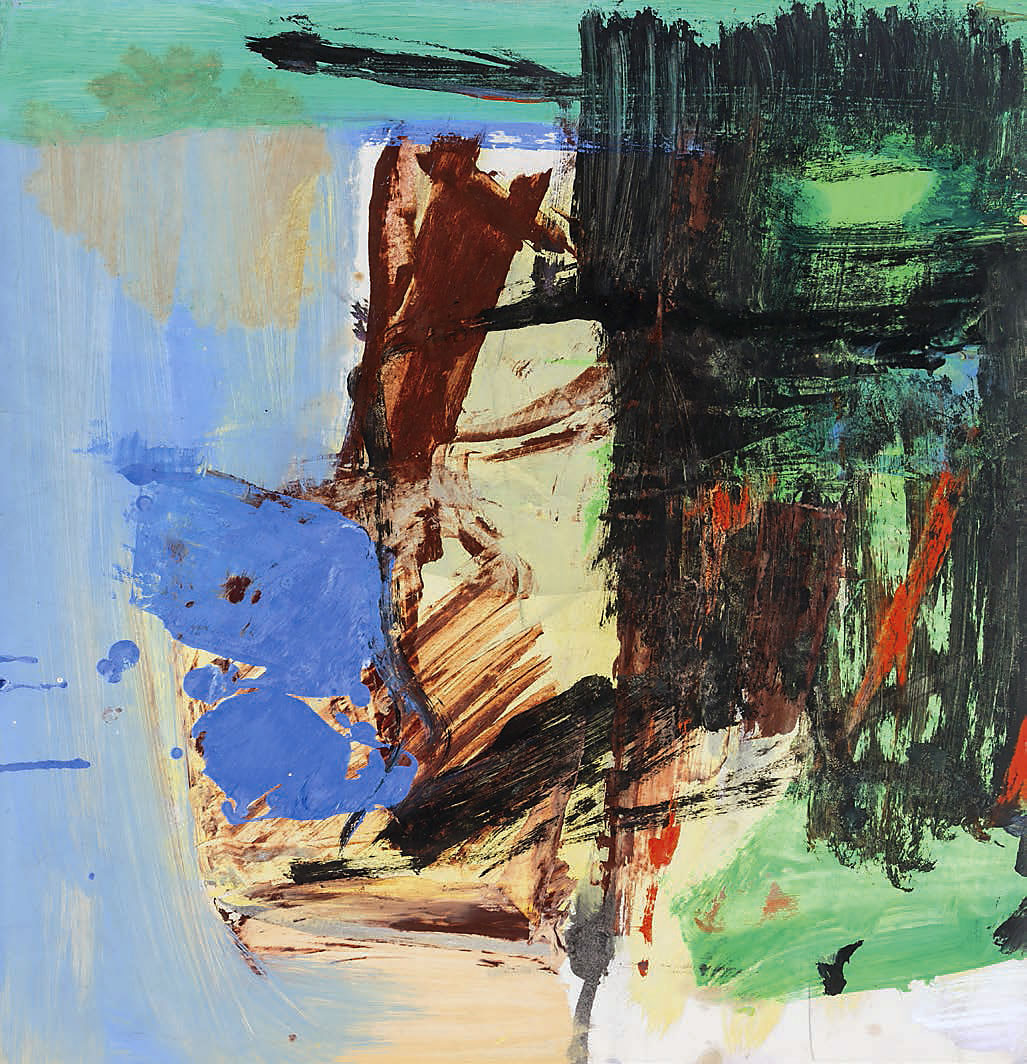
Franz Kline: 1910 - 1962

Kline was born in Pennsylvania. What at the age of 7, his father commited suicide. Shortly after, his mother remarried and sent him to Girade College, which was an academy for fatherless boys. 
He studied at Bosten University from 1930 to 1935, and then studied at Heatherly's school of art in London, where he met his future wife, Elizabeth V. Parsons, a British ballet dancer, who eventually moved back to the United States with him in 1938. Upon return, he began working for a department sore in New York as a designer. In 1939, he moved to New York, where met Willem De Kooning and worked as a sceneic designer and developed his artistic techniques and gained recognition as a significant artist.
Before developing his unusual style of gestural abstraction, Kline took inspiration from John French Sloan (1871 - 1951) and William Glakens (1870 - 1938).
Some of his work c.1946 were abstract, and had a cubist structure. In 1950, he began to make vigorous, large scale, calligraphic abstract paintings in black and white. 
After a one man exhibition in 1950 that elevated him within the art world, he became one of the leading Abstract Expressionists.
From 1958, he began introducing strong colours into some of his work. His unusual approach to Gestural Abestraction was beginning to influence the ideals of many Minimalists.

Gestural Abstraction: Action painting, also called Gestural Abstraction, is the style of painting in which paint if spontaneously dripped, splashed or smeared onto the canvas, rater than being carefully applied.

In 1962, Kline died of Rhuematic Heart Disease.

Untitled
1960

Meryon
1960 - 1961
Willem De Kooning: 1904 - 1997:

De Kooning was born in Rotterdam, Netherlands. De Kooning's parents dicorced in 1907. At the age of 12, he was an apprentice to a firm of commercial decorators and artists. While working as an apprentice, De Kooning took evening classes for 8 years at Rotterdam Academy of fine arts and techniques. After learning at the Academie van Bee,dende Kunsten en Technische Wetenschnappen, which later became the Willem De Kooning Academie, he travelled to the USA as a stowaway on the Shelley, which was a British freighter bound for Argentina.
When he immigrated to the United States in 1926, he supported himself through paining signs, department store displays and also did some carpentry. He decided to become a painter after a year on the WPA art project 1935.

WPA: The federal art project was the visual arm of the great depression era works progress administration, a federal one program.

In the 1930's and early 1940's, De Kooning painted abstractions and figures, and around 1945, he worked in mainly black and white with high velocity and erotic shapes, and since 1969, has also made numerous sculptures. His style was that of fused Cubism, Surrealism and Expressionism. 
De Kooning was on of the most prominant abstract expressionists after Pollock


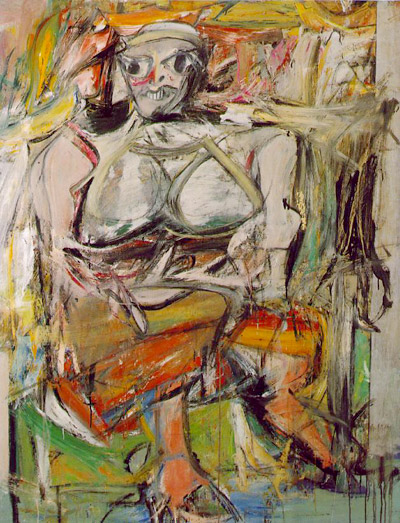
De Kooning established his reputation with entirely Abstract paintings, and he felt a strong pull toward subjects and would eventually become most famous for his pictures of women.

Woman I
1950 - 1952
Marylin Monroe
1954
Asheville
1948
Robert Motherwell: 1915 - 1991:

Motherwell was a painter, but also an editor, teacher and, a writer. He was born in Aberdeen, Washington, and studied briefly at California school of fine arts between 1937 and 1937, and also earned a BA in Philosophy from Standford University.
In 1940, he moved to New York to study history at Columbia University. After this, he began to paint.

He became friends with Malta and other Surrealists who lived in New York, and decided in 1944 to become a professional painter. He met Pollock and Baziotes and experimented with them in the use of Automatism and other Surrealist techniques.

Automatism: The performance of actions without conscious thought or intention.

In 1944, Motherwell also became the director of the series 'The Documents of Modern \Art', which as published and written by Schultz.
Motherwell also collaborated with Baziotes, Hare, Rothko and later Newman in running the art school 'The subjects of the artists' in 1948 to 1949.

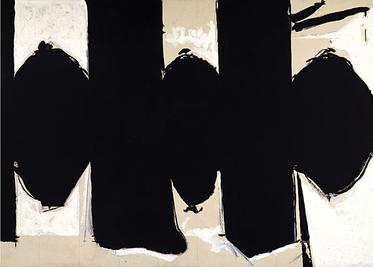
Motherwell painted many large pictures, including the extensive series known as '\Elegy to the Spanish Republic' and 'open', and has also made a number of collages. 
-His paintings, prints and collages feature simple shapes, bold colour contrasts and a dynamic balance between restrained and boldly gestural brush strokes. His artwork reflects a dialogue with art history, philosophy and contemporary art, but also a sincere and considered engagement with autobiographical content, contemporary events, and the essential human conditions of life, death, oppression and revolution.

Due to his asthmatic condition, Motherwell grew up mainly on the Pacific coast, and as a result, developed a love for broad spaces and bright colours, that later emerged as essential characteristics of his abstract paintings. His later concerns with themes of morality ca likewise be traced back to his frail health as a child.

Elegy to the Spanish Republic
1970
Figure with Blots
1943
Untitled
1978

Wednesday, 16 December 2015

Art History

Art History


Ai Weiwei


7/12/15

Ai Weiwei was a is a Chinese contemporary artist and activist who currently resides and works in Beijing. He was held for 81 days without any official charges being filed at Beijing Capital International Airport. The reasons for his arrest are widely disputed,  the Chinese Government themselves put out a status that it was for tax evasion. 
Ai Weiwei's treatment while imprisoned was what he considered psychological warfare. 
He is highly and openly critical of the Chinese Governments stand on democracy and human rights.

When arrested, Ai Weiwei lost his passport, and everyday since, outside of his studio he places a bike with flowers in the basket, which he changes everyday.

The dispute between Ai Weiwei and the Government, however, doesn't impede on his career, since the Government themselves made him a consultant for the Beijing Olympic Stadium.


Sunflower Seeds
2010 - 2011
'Sunflower Seeds' was initially part of a commission for the Tate. There were over 100,000,000 hand-crafted porcelain sunflower seeds, which weighed over 150 tonnes. It covered the 1,000 square feet of the Tate Modern Turbine hall, and was 10 centimeters in depth. It took over 1,600 artisans in the town of Jingdezhen, where imperial porcelain was made for over a thousand years. It took two and a half years and a 30 step procedure for each sunflower seed to be crafted, painted and fired, and was, according to Ai Weiwei, one of the most costly art pieces among all art pieces, Chinese and Western.

There are many meanings behind the sunflower seeds. They remind Ai Weiwei of the hardships and hunger of the cultural revolution, as they were a common street snack.
For him, the 100 million sunflower seeds are 100 million pieces of art. Every single seed has something different about it, just like the artisans in Jingdezhan, who crafted the sunflower seeds, and just like the 1.3 billion people in China. Through using the sunflower seed, he creates a domino affect, which enlarges the lengthy and complicated process by 100 million times. By devoting patience, he gathers together 100 million individuals, and shows how strong they are together. 


Ai Weiwei began making investigations into the Government corruption and cover - up's, in particular, the Sichuan school corruption scandal, that followed the so called 'tofu drew school' in the 2008 Sichuan earthquake in 2008.

When he had heard about the earthquakes, and what had happened, he immediately went to the site of the collapsed buildings. He wanted to know how many people had died and of what age they were. After walking around, he began to notice all of the backpacks. This launched his campaign to find out who had died within the earthquake.

People volunteered to help. Over 40 groups were sent out in order to find out who had died, and most of them got arrested. 

Out of this came many pieces of artwork, in particular, two huge installations. 

In Germany, he created a 10 meter by 100 meter installation of the side of the 'Haus Der Kunst'. Each backpack within the piece represented a life lost in the tofu dreg school corruption scandal. 

The piece was made after the mother of one of the earthquake victims asked to commemorate her daughter. The piece was made up of 5 colours, and in chinese writing, it read 'for seven years she lived happily on this earth'


Remembering
2009

The second piece was an installation called straight, which included over 150 tonnes of steel bars that he had bought and then straightened from the Sichuan earthquake tofu dreg school collapse. he had numerous people help him with straightening the bars, however, half way through the process, he was arrested. 
Upon getting back from his 81 day imprisonment, he arrived back at his stdio to find people still working on the bars. Along with this installation is a wall behind it with the names of every student who died in the collapse. 

Straight


Wednesday, 2 December 2015

Art History

Art History

Degenerative Art


2/12/15


In Berlin, 1933, The nazi part came to power. They began burning book and attacking artists and writers. 

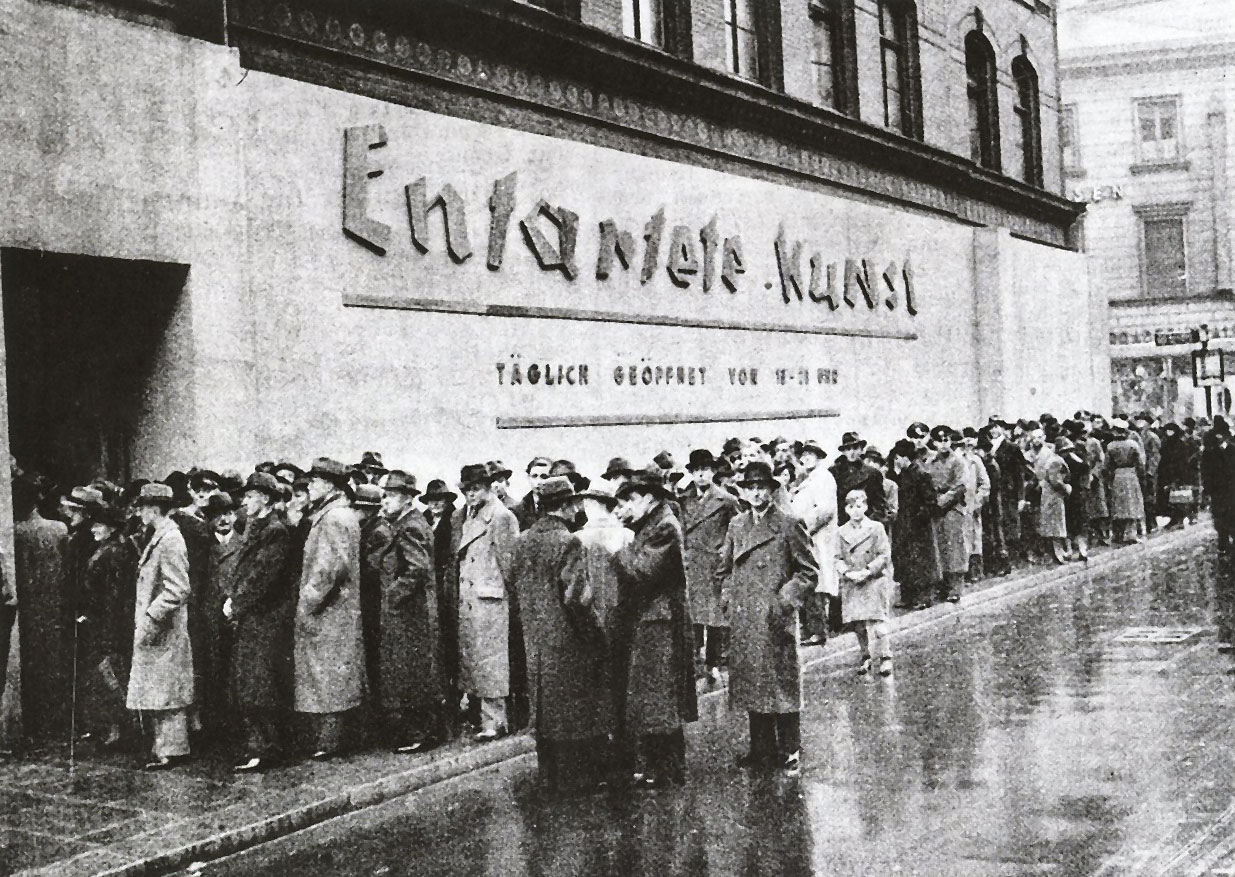
in 1937, the Nazi's opened an art exhibition which they called 'Entarte Kunst', or Degenerative Art. 


Over time, art had gone from being something shocking and dangerous to something that was harmless. Adolph Hitler had promised a new Germany, one that was cleansed of what he called 'Degenerates', and had an idea to create a master race, also known as the Aryan Race.

The show had a claustrophobic effect, and once shocking art was now being hung on the walls, crowded, off center and sometimes upside down and surrounded by graffiti to be ridiculed. 

Hitler himself, was an artist, however was failed to have been recognized and was turned down by the Academy of Fine Arts. 

Expressionism: A modernist Movement, initially in poetry and painting, originated in Germany at the beginning of the 20th century. Its typical trait is to present the world solely from a subjective perspective, distorting it radically for emotional effect in order to evoke moods and ideas.

Gradually, when Hitler rose to power, World War 1 became the turning point, and in 1914, he sent the Expressionists to war and into the trenches, with the intent to send them crazy. 

It was because of his own experience with war and those who had put him there that Hitler decided to go into politics. He abandoned his dream to become an Artist and formed his own party, The National Socialist Party, or, the Nazi's. 
He was thrown into a Bavarian prison for trying to overthrow the Government.

Knowing what was degenerate became a medical science, and being degenerate meant that you were diagnosed as crazy. Expressionists, however, considered themselves the mentally ill in the world of art. 

In the 1920's, fewer than 27,000 Nazi's were in the country, and when Berlin became the capital of the international art world, fewer people cared for Hitler and his party. in 1929, the great depression broke the German democracy. 

The Nazi's were considered the opposite of the Government Germany had at the time.

The Nazi's began moving through Germany, going into Museums and confiscating art and firing directors, known as 'Vacationing'. During this time, the Bauhaus was closed. Books of famous writers were burned in Berlin.
The arts were affected; Films were banned, abstraction wasn't allowed, and music that had deviated from Classical was forbidden, due to this, Jazz music was attacked. Hitler resolved to create a new culture. The first Nazi project was a building that was a museum, and was named 'The House of German Art', or 'Haus Der Deutschen Kunst'. The Art within was picked by Hitler himself, and all of it was for sale, the main buyer being Hitler. The Nazi depiction of art was classical. Statues of men were all well build and muscular, and paintings of women were all nude and baring children. 

The was against Modernist Art was reaching a climax. Pieces by people such as Wassily Kandinsky were hung up in the 'Degenerate Art' show, and overall, over 16,000 pieces were collected. Every single piece within the exhibit, if not understood by the witnesses, were in there for a reason, from such things as being sick minded, to Jewish, Communist and Bolshevic. 112 Artists were singled out as Degenerate, and only 6 of them were Jewish.

Max Beckmann: 1884 - 1950

Beckmann was a German Painter, Sculptor, Draughtsman and Printmaker. While being considered an Expressionist Artists, he rejected both the Movement and the term. He was dismissed from his teaching position in an art school in Frankfurt for being a 'Cultural Bolshevic', and in 1937, more than 500 pieces of his work were taken from museums and confiscated by the Government, and several were put o display at the Degenerate Art Exhibition.
Beckmann's work showed his experiences in the first and second world war, the political change of the 1920's and 1930's, the rise of Nazism, exile in Amsterdam and his final emigration to the United States.
'Der Nacht'
1918 - 1919
Otto Dix: 1891 - 1969

Dix was a German painter and print maker, who was profoundly affected by him time spent in the war. He was also regarded a Degenerate by the Nazi's, and was consequently fired from his teaching job at Dresden Academy. His paintings, 'The Trench' and 'War Cripples', were features in the Degenerate Art Exhibition, and were later burned. 
He was forced to join the 'Reichkammer der bildenden Kuenste, and had promised to paint only inoffensive landscapes, 
In 1939, he was arrested in a charge of being involved in a plot against Hitler, but was later released.

'War Cripple'
1920
Emil Nolde: 1867 - 1956

Nolde was a painter,print maker, and a watercolourist. He first trained as a woodcarver, and later studied as a painter. He was one of the first Experssionists, and is known for his bold choice in colour and intense markings. 
Nolde was a supporter of the Nazi party from the early 1920's, having become a member of its Danish section, and expressed negative opinions about Jewish Artists, while considering Expressionism to be a distinctively Germanic style. 
Hitler, however, rejected all forms of Modernism and 'Degenerate' Art, and so the Nazi regime condemned his work. over 1,000 pieces of his work were removed from museums, more than any other Artist, and some were also included in the Degenerate Art Exhibition. Despite his protests, he was not allowed to paint, even in private, after 1941. During this time, however, he created hundreds of watercolour pieces, which he hid, and called the 'Unpainted Pictures'.

'Candle Dancers'
1912
George Grosz: 1893 - 1959

Was one of the principal artists associated with the Neue Sachlichkeit, along with Max Beckmann and Otto Dix. Grosz was also a member of the Berlin Dada group.
He became deeply involved with left wing pacifist activity.
He was one one of the first of the Expressionist, and was, as a result, made a public enemy by the Nazi's. He used to speak his mind and was known for creating very grotesque pieces. He used his art as a weapon. He liked to poke fun at everyone, especially the Nazi's. It was the Nazi's declaration of war against modern art that made him a public enemy. 
Grosz moved to the United States when he started getting threatened. The Nazi's took everything away from him, including him German Citizenship, his bank account, and he was also made an enemy of the German state. 


Ernst Kirchner: 1880 - 1938

Kirchner was seen as one of the most talented and influential of German Expressionists. He was motivated by the fear of humanities place in the modern world, and its lost feelings of spirituality and authenticity, as well as the modern world itself. He had conflicting attitudes about the past and the present, and rejected academic styles.
He volunteered the first world war but was discharged after a breakdown. Afterwards, he settled in Davos, Switzerland, because of his illness, and shot himself to death because of depression in 1938


Neue Sachlichkeit: The new objectivity is a term used to characterised the attitude of public life in Weimar Germany as well as the art, literature, music and architecture created to adapt it. 

The Degenerate Art Exhibition toured Germany for over 4 years, and over 3 million people visited it. In 1939, an Auction in Switzerland had all of the huge artist, such as Picasso, Matisse, and other German painters were sold off. Hitler was selling German heritage. 

Every year, there was a new exhibition at the German house of art, and Hitler was always the biggest buyer.

Art History

Art History


Bauhaus


25/11/15


Bauhaus: Also known as Staatliches Bauhaus, but more commonly known as Bauhaus, was a, art school in Germany that combined crafts and the fine arts, and was famous to the approach to design that it publicized and taught. It operated from 1919 to 1933.

The Bauhaus was founded by Walter Gropius, a German architect who was regarded, along with Ludwig Mies Der Rohe, Le Corbusier and Frank Lloyd Wright, ass one of the pioneering masters of Modern Architecture.

The Bauhaus also introduced the foundation course, which has become important in today's education, and highly emphasised colour and geology. Colours and form were subjected to scientific law.
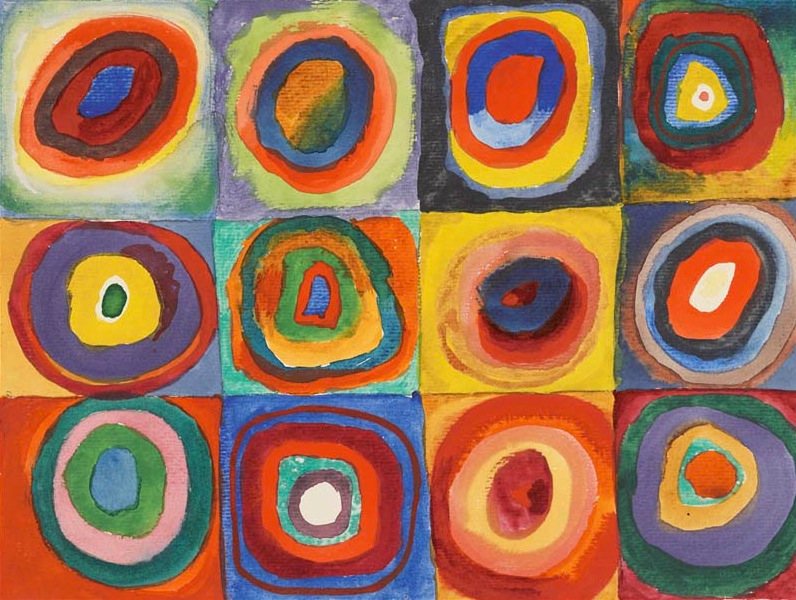
Kandinsky taught that the cirlce, square and triangle, which were primary forms, represent and coney qualities identical to those of primary colour, red, blue and yellow.

Walter Gropius: 1883 - 1969

Gropius was born in Berlin, and got married in 1915 to Alma Mahler. In 1916, they had a child called Manon, who died of polio at the age of 18. 
In 1914, Gropius was drafted and served as a sergeant, and then lieutentant in the first world war. throughout his career, he was awarded the Iron Cross twice, and then became an architect, like much of his family before him.

Tecta
Bauhaus building in Dessau


The first Bauhaus was in Weimar, the city where the new constitution was established, which became known as the Weimar Republic, and was a change in the government system. It came into being after the first world war in 1918 to the rise of Nazism in 1933. There was hope to create a modern liberal democracy in a state that had only known of authoritarian monarchy and state power.
During the 1920's, there came a period dubbed 'The Golden Age of Weimar', which was brought along by economic recovery, social renewal and cultural renovation. The great depression in the 1930's brought this all to an end and brought on the era of Nazi totalitarianism. 

The Bauhaus was supported by public funds, and created the modern art student. It created the methods of workshop based art and design, which was the backbone of the Bauhaus, and one of its aims was to destroy the boundaries between the many different sides of art. It was the first time that an emphasis had been put on student individuality.
Because of the depression, students who studied there had to work with what they had at hand, which often meant going to junk yards to find materials. It was a place of freedom, for both students and lecturers, but was frowned upon by the people who lived in Weimar due to the outlandish lifestyles of the people who studied and worked in the Bauhaus. 

Too many women applied to study there, and so they were segregated into different workshops, usually made to do weaving and pottery instead of metal and wood work because they were considered fragile, and it was more of a lady-like thing to do. That being said, however, one of the best creators in the metalwork class was Marianne Brandt.

Marianne Brandt: 1893 - 1983

Brandt began her studies at the Weimar Bauhaus in 1924, after first studying at a private art school in Weimar in 1911, the Hochschule fur Bildende Kunst Weimar, amongst other things. Her classes were taught by people such as Laszlo Moholy-Nagy, who was her lecturer for her metalworks class, Paul Klee, and Wassily Kandinski. She continued her studies to the Bauhaus in Dessau, and continued to study with Moholy-Nagy. 


The lecturers at Bauhaus:

Paul Klee: 1879 - 1940

Klee was a German watercolourist, and etcher, and was one of the most inventive artists of the 20th century. He moved to Weimar in 1921 to teach at the Bauhaus, and moved to Dessau in 1926 to continue his work there.

Paul Klee Senecio
1922

Wassily Kandinski: 1866 - 1944

Kandinski was born in Moscow. He was a painter, wood engraver, lithographer, teacher, and theorist. He moved to Munich to study painting and spent two years at the Azbe School after studying Law and declining an offer of a chair at Dorpat University in 1896. His woodcuts were often ispired by Russian folk and fairy tales, and also painted landscape studies directly from nature. 
He developed a Fauve-like contrast of colours and then began to eliminate the representational element from his paintings and compose with abstract colours and shapes. He was appointed a professor at the Weimar Bauhaus in 1922, and moved with the Bauhaus to Dessau in 1925. He began to work with precise geometrical forms, and after the closure of the Bauhaus in 1933 by the Nazi's, lived ou the rest of his life in Paris. 

Squares with concentric circles
1913
Laszlo Moholy-Nagy: 1895 - 1946

Moholy-Nagy was a Hungarian based abstract painter, designer, typographer, photographer, film maker, and theorist. He studied law at Budapest University and, after being severely injured in the Austro-Hungarian army, began to paint in 1917. He moved to Berlin in 1920, and began to paint abstract pictures under the influence of Kazimir Malevich and El Lissitzky. He met Gropius in 1923 where he was appointed as a professor at the Bauhaus, and moved with the Bauhaus to Dessau in 1925. He became more involved with experimental photography, including photograms. 
Moholy-Nagy resigned from the Bauhaus in 1928 and returned to Berlin, where he temporarily moved away from painting and began with stage designs, abstract film and typographical works. 


Johannes Itten: 1888 - 1967

Itten was a Swiss painter, writer, designer, teacher and theorist. He trained as an elementary school teacher from 1904 to 1908. He taught using methods developed by the creator of the kindergarten concept, Freidrich Frobel, and was exposed to the idea of psychoanalysis.
From 1919 to 1922, Itten taught at the Bauhaus and developed the innovative 'preliminary course', which was there to teach students about the basics of material characteristics, compositions and colour. 
Itten invited Paul Klee and Georg Muche to join him at the Bauhaus. 
Itten was a follower of the Mazdaznan, a cult which had originated in the United States and was largely derived from Zoroastrianism. 

Zoroastrianism: One of the worlds oldest monotheistic religions, was founded by the prophet Zoroaster in ancient Iran approximately 3500 years ago

Mazdaznan: a movement that emphasized the monothesis of faith in Mazda, the good creator. It incorporated elements of both Hinduism and Christianity. 

Itten's religion created conflict between him and those who had converted to his religion (Muche) and Gropius, who wanted the school to move more towards mass production that expressing student individuality. Eventually, Itten resigned and was replaced by Moholy-Nagy in 1923.

Horizontal Vertical
1915
Georg Muche: 1895 - 1987

Much was a german banter, printmaker, architect, author, and teacher.  From 1916 to 1920, he taught at the Sturm art school, and his exposure to the Expressionist world influenced him to become more unconventional in his work, combining abstractions that combined elements of Cubism with the colour ideals of Der Blaue Reiter and Marc Chagall.
His art career was interrupted by serving in the military for one year in the Western Front during the first world war.
Much was invited to the Wiemar Bauhaus in 1919, where he became the youngest master in form, and was the head of the weaving workshop from 1919 to 1925 and directed the preliminary course from 1921 to 1922. From 1925 to 1927, he headed the weaving workshop in Dessau.


Oskar Schlemmer: 1888 - 1943

Schlemmer was a German painter, sculptor, choreographer, and designer. He was hired as a master of form at the Bauhaus theatre workshop. His most famous work is the 'Triadic Ballet' or the 'Triadiches Ballett', in which actors are transfigured from their normal human form to geometrical shapes. Schlemmer was appointed at the Bauhaus by Walter Gropius to run the mural painting and sculpture department in 1920 before heading the theatre workshop. 
In 1929, Schlemmer resigned from the Bauhaus and moved to the Art Academy in Breslau. 

The Triadic Ballet
Josef Albers: 1888 - 1976

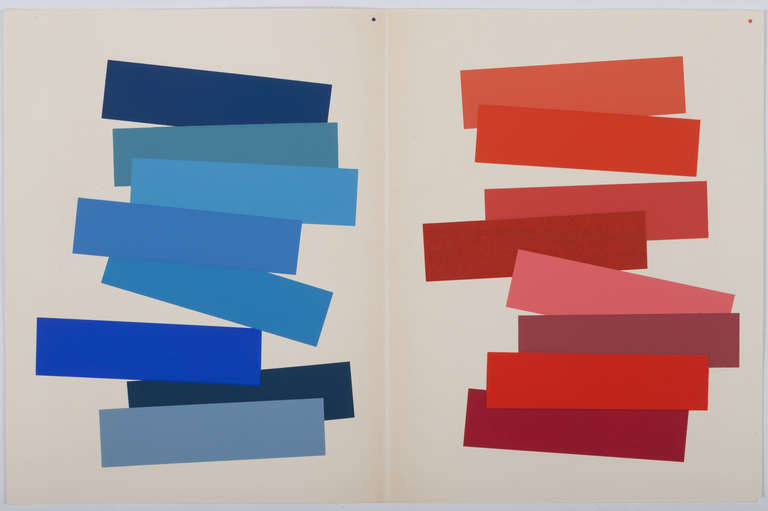
Albers was the first student to beome a lecturer at the Bauhaus in 1922 to 1933. He first taught at the Bauhaus in Weimar, and then the Bauhaus in Dessau, and taught typography, furniture design, and basic design. After the closure of the Bauhaus, he moved to USA. He was said to drag madness out of his students, and help them think clearly.


The Bauhaus trained artists to not think as artists, but as engineers. 

The Bauhaus Exhibition: 1923

It was demanded by the government that something was coming out of the tax payers money, and so an exhibition was created, which showed the transition from the early and rather Expressionistic Bauhaus, to the later Constructive Bauhaus. The most important feature was the Haus Am Horn, which was on a hill in Weimar on a sheet called Am Horn.


Haus Am Horn:

The Haus Am Horn was an experimental residential house built in 1923 as part of the first Bauhaus exhibition. It was designed by George Muche and was constructed by Walter Gropius under Adolph Meyer, a psychiatrist and architect. The furniture was designed by Marcel Breuer, and the light by Moholy-Nagy. All of the interior was fabricated within the Bauhaus workshops.
It was a prototype of an idea that those at the Bauhaus believed was residential housing. It was economically sound and was cheap to make. 
It was deigned with a kitchen that was a laboratory for cooking and It was part of the unit of the house. Within the kitchen, it had the storage and layout to produce a sufficient center to the house.


When the Hyperinflation hit in 1923, there was a huge backlash to the Art industry. The future of the Bauhaus looked very bleak because, while it had never been popular within the city, it was becoming increasingly labeled communist, and was eventually closed down in 1924 by the National Socialist Party, or the Nazi's, who deemed it communist. 
The Nazi party started protests against communism.
Because of the hyperinflation, more money was getting printed to compensate for the devaluation of it, some was even printed at the Bauhaus. The Haus Am Horn remained the only one of it's kind.

Hyperinflation: In economics, Hyperinflation occurs when a country experiences very high and usually accelerating rates of inflation, rapidly eroding the real value of the local currency, and causing the population to minimize their holdings of the local money.

Politics during this time, was very left wing. some of them were communists, however the Weimar citizens spat on the pavement because the communists were the enemy. Nazi's were marching through the streets protesting against communism. Artistic matters were used as a political football, and when the National Socialist Party grew stronger, the Bauhaus lost it's support. 
The Bauhaus was declared publicly closed in 1924, before it could be closed down by the Nazis.

In 1925, the Bauhaus reopened in Dessau, an industrial city to the North, which was richer due to it's chemical and engineering works, and politically more liberal than Weimar. 
The Bauhaus workshops were now designing for industrial manufacturing and mass production, so Dessau seemed like it's natural home.

There was money for a new school building, which Gropius designed, and due to advanced construction techniques, it took no longer than a year to build, and was primarily made out of glass, steel and concrete. Everything was under one roof. 
The Bauhaus was one of the first buildings in Europe that expressed a desire for simplicity and directness, which affected architecture everywhere at the time. It was a perfect example o constructivism. It seemed severe and clinical, and less like an art school and more like a laboratory. The workshops int he Bauhaus created all of the furniture and fittings for the new building. Furniture began to follow the principals of engineering, not aesthetics, and took inspiration from such things as cars, planes and bicycles, not ornate furniture.

'The Wassily Chair'
Designed for Wassily Kandinsky, was the icon of the age.
Photography was exploited as not just an artform, but as a form of visual communication. Experiments were made with photomontage, double exposure and over-printing. 
Typography and Graphics design made commanding statements, and were bold, simple, and deviod of any kind of decoration. 
Typefaces and layouts were rethought, in terms of optics and communication theory. Even advertising and display were changed as well. The face of the 20th century was designed, manuactured and staged at the Dessau Bauhaus. 
Even in Dessau, people didn't like the outlandish lifestyle of the Bauhaus students, especially the female students who chose to wear trousers. 

The biggest change at the Bauhaus was the introduction of the Architecture department, in which students collaborated on the design and planning of an estate of workers houses in a Dessau suburb. The estate intended to deal with the housing shortage, that were cheap to build, buy and easy to run. They were flat roofed Utalitarian buildings. 
Head of the Architecture department, Hannes Mayer, believed that building was not an art, but a science, and soon became the second director of the Bauhaus. Gropius stepped back because he thought that his involvement with the Bauhaus would harm it. Meyer hadn't told Gropius of his strong communist political views. 
Meyer was the director for 2 years, in which he moved the school to left wing politics. This was because, in 1929, as a result of the world economic crisis, Germany became sharply polarized politically, which contributed to the rise of both the Nazi movement and the growth of Communism, which was also active at the Bauhaus. Meyer was removed from directorship because of this in 1930.

Ludwig Mies der Van Rohe was appointed in Meyers place. Ludwig Mies der Van Rohe was a Catholic theoretician. He was a quiet man, who, when arriving at the Bauhaus, was horrified by the functionist attitude, because he believed in art.
Mies Der Van Rohe wanted to bring back art as the foundation to the Bauhaus. While he was in directorship, Architectual studies dominated the Bauhaus, and all political activity was banned. 
The Nazi's took over the city council in Dessau, as they had in Weimar, and closed the Bauhaus. 

The Nazi's referred to the Bauhaus as Cultural Bolsheviks.

Bolshevick: A member of a wing of the Russian Social-Democratic Workers Party, which led by Lenin, seized control of the government in Russia (October 1917) and became the dominant political power.

Anything that was Bolshevik was Communist, and therefore evil in the eyes of the Nazi's.
Due to the furniture made and the connections developed between art and technology at the Bauhaus, It was dubbed as going on the wrong path.
The Nazi's were attatched to something they called 'Blood and Soil', which meant rustic furniture. 
Hitler had furniture made that had resemblance to Steam Liners, and demanded the people should use that type of wooden furniture, too, as he wanted to return to rustic simplicity. Those at the Bauhaus were hated because they were doing something different.
Although the ideals had changed Bauhaus made furniture remained on sale throughout the 1930's next to other things, such as Nazi memorabilia stores. 
It wasn't the objects that caused the problem, but the people; the teachers and the students, that got them into trouble.

The last home of the Bauhaus was in Berlin. It was an extremely depressing place to work because it was in a factory. All of the Idealism went, and so the masters of the Bauhaus decided to close it for good.
on the 11th of April in 1933, Police arrived at the Bauhaus with trucks, closed the building and took some of the student away.


While The Bauhaus died in Germany, it's students and teachers spread throughout the world taking their ideas and convictions with them, which took their deepest roots in America, particularly, Chicago. Thanks to a lot of the Bauhaus' previous teachers living there, the American city became the proving ground for the industrial world.

Friday, 6 November 2015

Art History

Art History


Art Nouveau


05/11/15


Art Nouveau: 1890 - 1914 A style of decorative art, architecture, and design prominent in Western Europe and the USA from around about 1890 until the beginning of the first world war, and was characterised by intricate linear designs and flowing curves based on natural forms.

Art Nouveau was considered the first self-conscious attempt to create a modern style. It developed first in England and then developed across the European continents and USA. It's name came from a Paris gallery, which showcased a lot of the work. It's influence can be found in things such paintings, sculpture, jewelry, metalwork, glass and ceramics. Its erotic nature of many Art Nouveau works is the most prevalent features of the style.


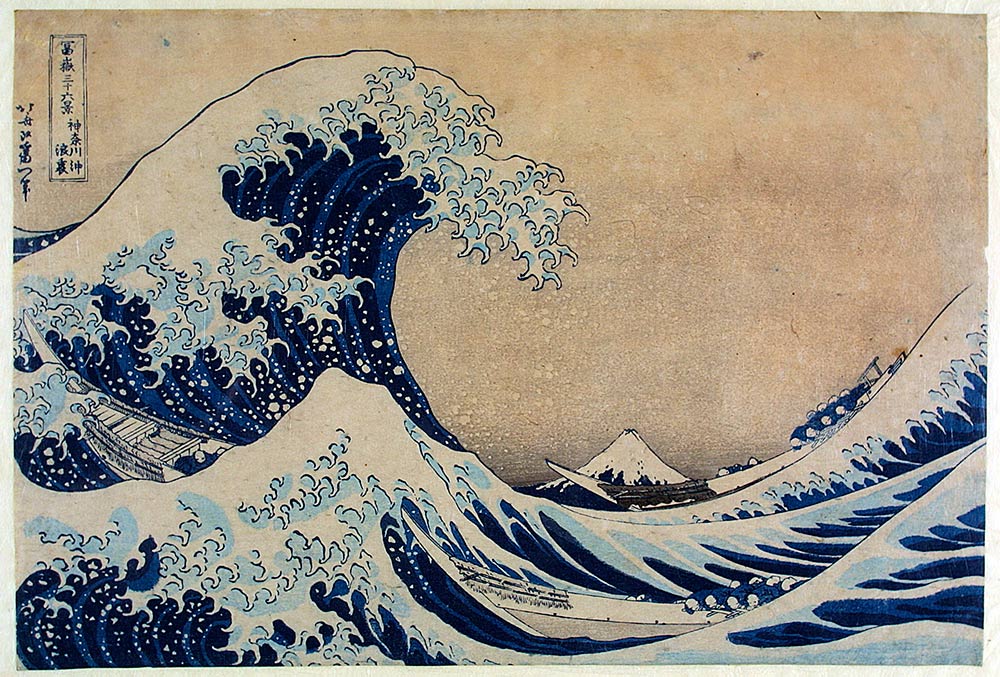
It is influenced by experiments with expressive line by the painters Paul Guaguin and Henri fe Toulouse-Lautrec, and was partly inspired by a vogue for the linear patterns of Japanese prints (Ukiyo-e)


Ukiyo-e: A genre of art that flourished in Japan from the 17th through 19th century. It's artists created woodblock prints and paintings of such subjects as female beauties; Kabuki actors and Sumo wrestlers; Scenes from History and Folk tales; Travel scenes and Landscapes; Flora and Fauna; and erotic.

Names in different European countries:

Germany: Jugendstil
Austria: Sezessionstil
Italy: Stile Floreale (Stil Liberty)
Spain: Modernismo (Modernista)

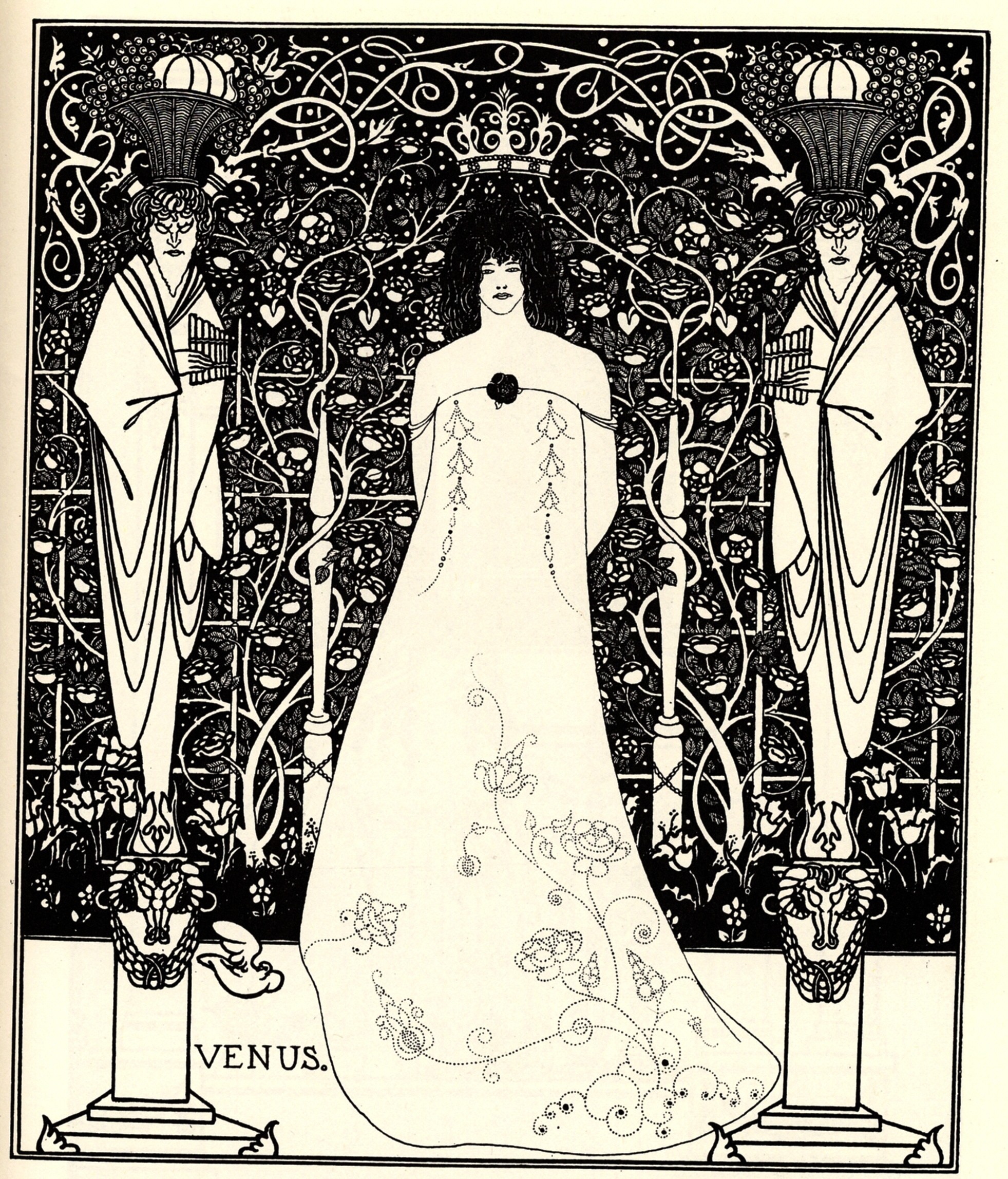
An artist called Aubrey Bearsley was at the forefront of the Art Nouveau movement in England, and the Aestheticism of his illustrations. 

Aestheticism: An approach to art exemplified by the Aesthetic movement

Aesthetic Movement: A late Nineteenth century movement that championed pure beauty and 'Art for Art's sake', emphasizing the visual and sensual qualities of art and design over practical, moral or narrative considerations.

Aubrey Beardsley (1872 - 1898:


Beardsley was an Illustrator and Author, and drew predominantly in black ink. He was born in Sussex, England, and died in Menton, France of Tuberculosis. He was the leading illustrator in England in the 1890's, and after Oscar Wilde, the outstanding figure in the Aesthetic Movement. 

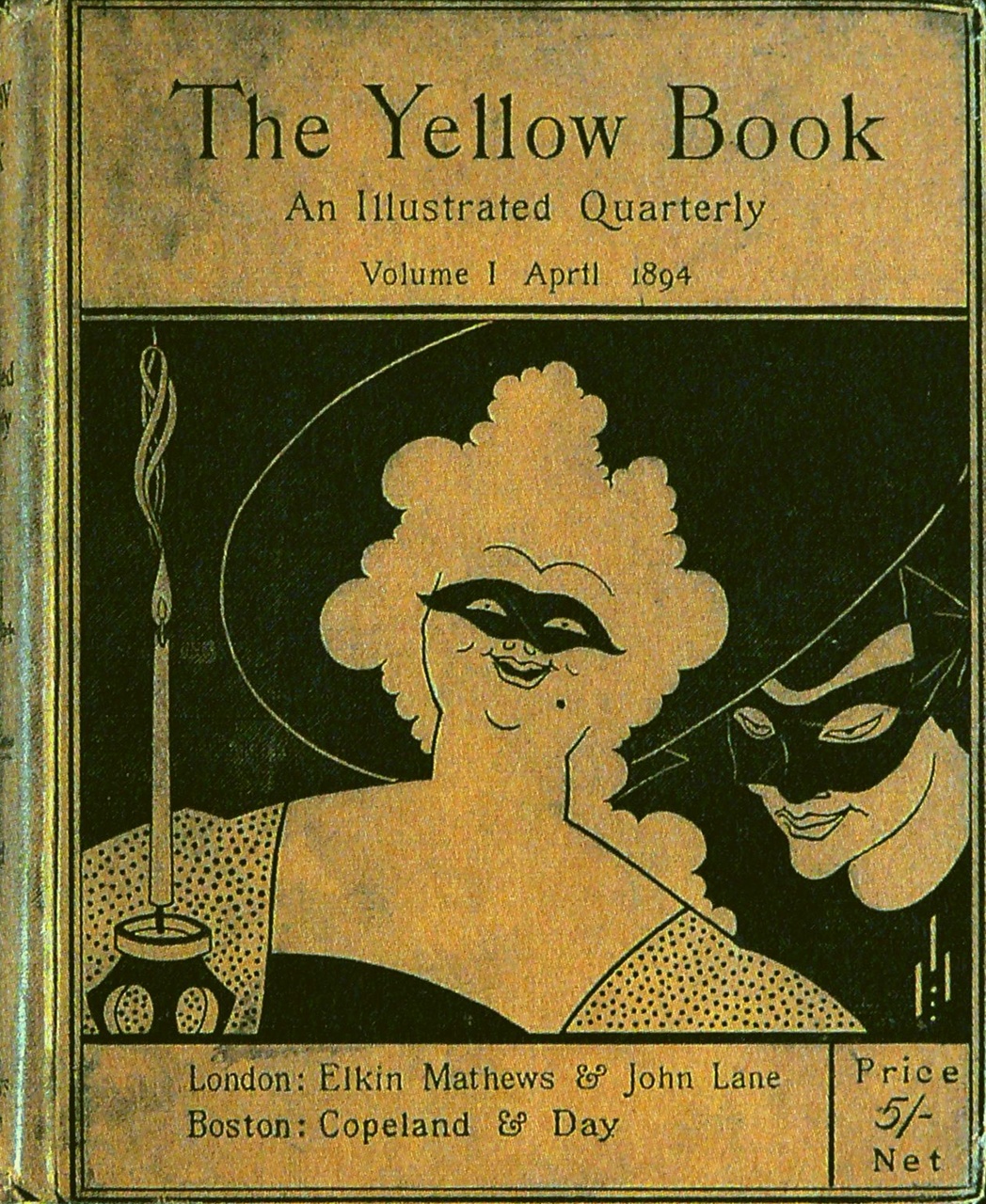
He practiced drawing when he lived as a clerk and, after a meeting with Edward Bourne-Jones in 1891, was prompted into attend evening classes at the Westminster School of Art for a few months. A few years later, in 1893, Beardsley was commissioned to illustrate a new edition of Sir Thomas Malory's 'Le Morte D'Arthur', and was soon after appointed the art editor of a quarterly magazine, 'The Yellow Book', not to be confused with another yellow book, which was a cheap magazine. 

Beardlsey depended heavily on the expressive quality of organic line and the Arts and Crafts Movement of WIlliam Morris, who had established the importance of a vital style in the applied arts.

The Yellow Book: Published in London in 1894 to 1897 by Elkin Matthews and John Lane, later Lane alone, was edited by the American Henry Harland, was a quarterly literary periodical (priced at 5s) that lent it's name to the 'Yellow Nineties'. It was a fashionable magazine that took it's name from the covers that controversial French novels had.


Aubrey Beardsley and Oscar Wilde:

Oscar Wilde was a play writer, and Beardsley's illustrations for Oscar Wilde's 'Salome' won him widespread notoriety, however he was eventually dismissed from 'The Yellow Book' due to his association with Wilde, who was arrested for the then criminal offence of being homosexual, who happened to be carrying a yellow book at the time, most likely the cheap magazine. 

Wilde was imprisoned in 1897 in Reading Gaolin, London, and when released, moved to Paris, where he was hated. He had two children and a wife, who had all left him when realizing his choice in lifestyle. He died in 1900 of Meningitis, a serious disease in which there is inflammation of the meninges, caused by viral or bacterial infection, and marked by intense headache and fever, sensitivity to light, and muscular rigidity.

Jacob Epstein (1880 - 1959)

Epstein was an English sculptor and painter. He was born in New York, America of Polish Jew parentage, He moved to London in 1905, and became a British citizen in 1907. Epstein was the creator of Wilde's tombstone. Epstein helped pioneer modern sculpture.


The tombstone was a highly controversial piece. At the time, it was an angle with it's genitals on show, however, the groundsman hacked them off. 

Epstein's work was highly unpopular, and two of his most famous pieced were showcased in a freakshow in Blackpool: Genesis and Jacob and the Angel.

Genesis
1929 - 1930
Jacob and the Angel
1940 - 1941
Alphonse Mucha (Alfons Maria Mucha) 1860 - 1939:

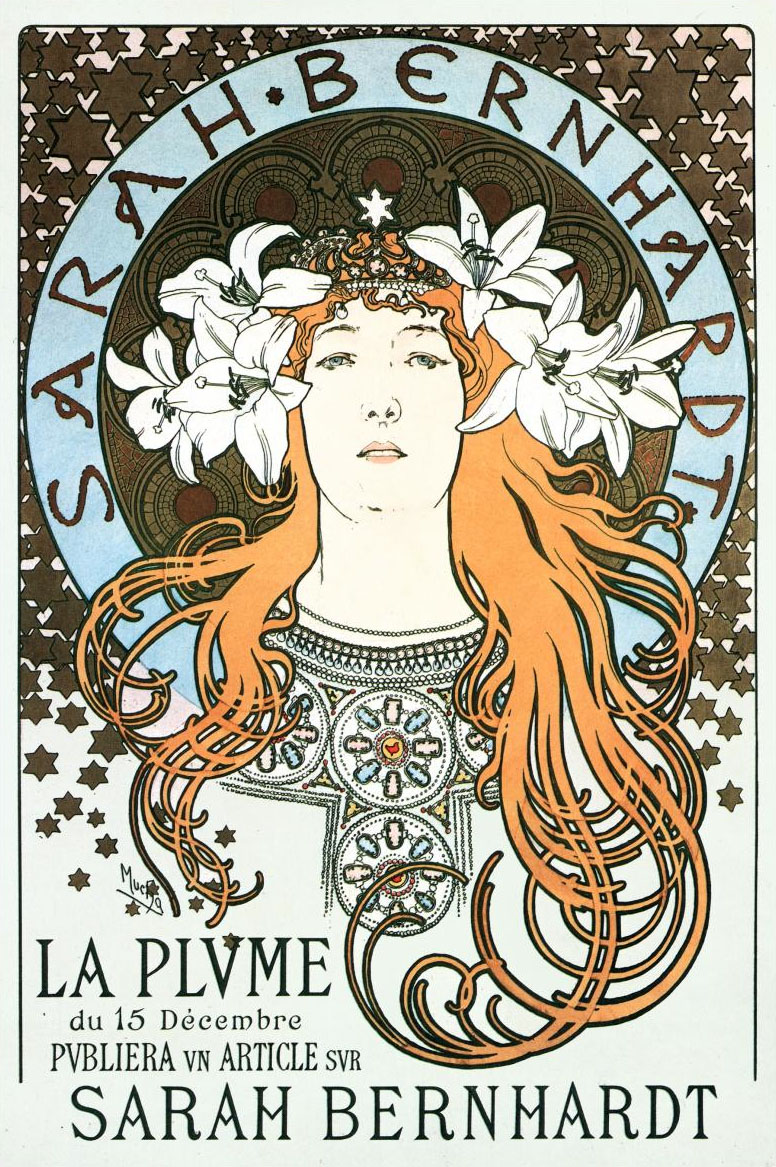
Alphonse Mucha was an unknown artist until his poster of the well known actress of the time, Sarah Bernhardt. Story goes that he worked in a print shop and everyone had gone home for Christmas. Bernhardt wanted a poster crreating to publicize her latest work and so asked Mucha to do it. After creating the poster, Bernhardt requested an audience with him, and he had thought himself to be in trouble, as his poster was not in the style of most. She loved it, and gave him a 6 year contract, which subsequently boosted his name and made him an overnight success. 


Mucha became the front running artist of the movement in Paris, which was known as 'Le Style Mucha' for a while. 
He got married in 1906 in Prague to Maruska Chytilova.
The 1900 Universal Exhibit boosted Art Nouveau internationally, along with the creation of the Metro in Paris.